
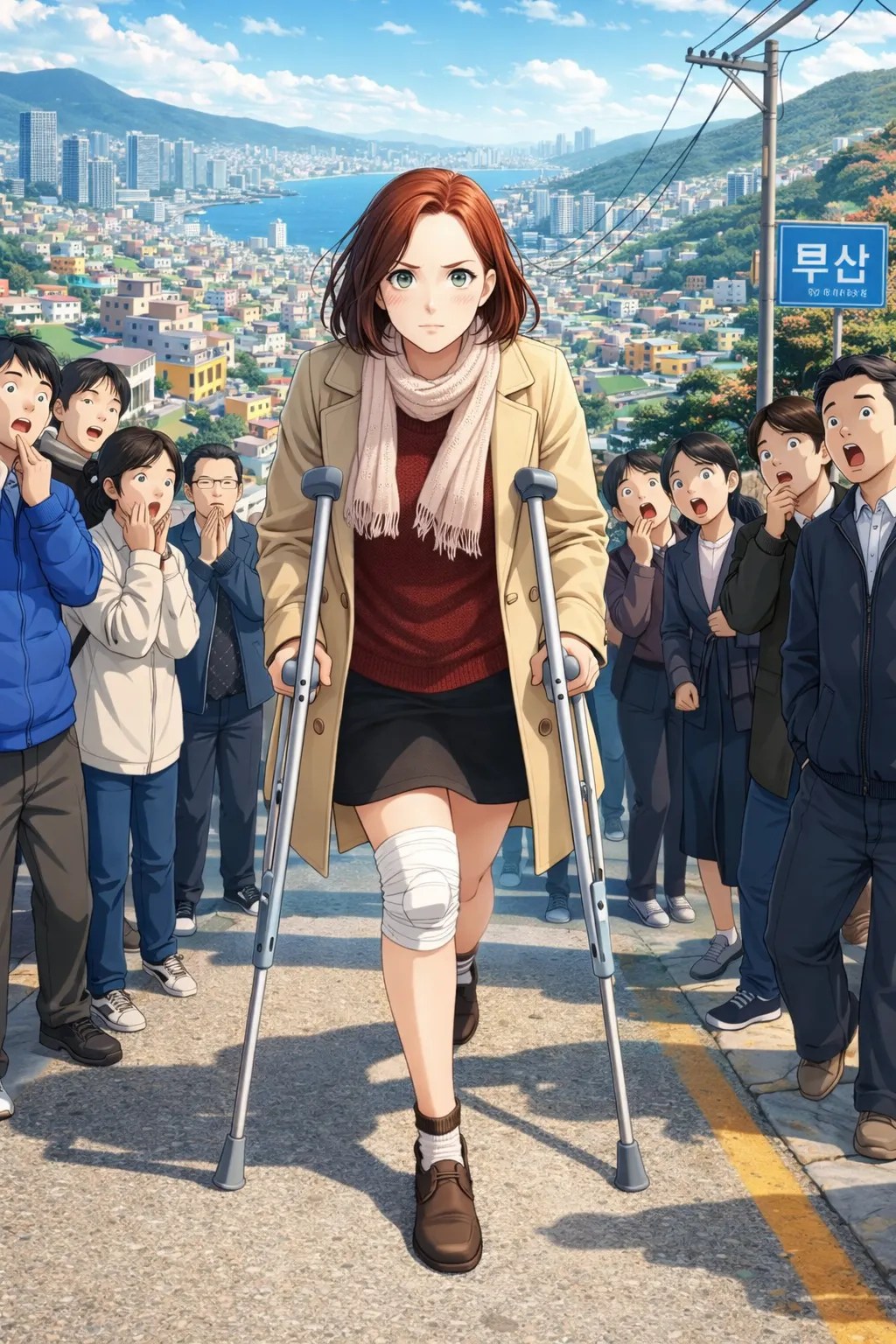
For this post, I’m going back to where my journey really began.
I left Kansas City for Busan, South Korea, in the spring of 2006. I had signed a year-long contract with an English-language kindergarten in a suburb of Korea’s second-largest city. On paper, it looked like a dream: decent pay, a pension, free accommodation, and health insurance.
What could possibly go wrong?
At the time, I had nothing keeping me in Kansas City. I was running from difficult family relationships, unemployment, and a broken heart. There was nothing to return to either — and that absence became a defining force in who I would become.
I was optimistic. Naive, even. I believed that most people lived by the same rules I did. I believed in fairness. In justice. In the idea that if you tried hard enough, you would eventually find where you belonged.
I didn’t know myself at all.
What I thought was just “quirkiness” — that persistent sense of being fundamentally different from everyone around me — was something much deeper. But I didn’t have the language for it yet. I only had the feeling. And the conviction that somewhere in the world, there were people like me. People I could belong to.
Leaving had been on my mind since I was a teenager. I had tried before and failed. But the urge never left. It wasn’t just a desire — it felt like a compulsion. The alternative, staying and forcing myself into a life that didn’t fit, made me physically ill with anxiety.
So I left.
The job was worse than anything I could have imagined.
Very quickly, I realised that in Korea’s rigid hierarchy, my status placed me somewhere just below human and just above a family pet. I was put into tiny classrooms packed with children under five years old and expected to control them.
They didn’t see me as a person.
I sang off-key. I danced. I performed. I did everything I could to meet my employer’s expectations, even as it felt like I was reducing myself to something less than human just to survive.
I had to constantly fend off tiny hands reaching down my top or up my skirt. Children stroked the hair on my arms as if I were an animal. They used the little English they knew to insult me — daily, enthusiastically. Their favourite phrase was “fat pig.”
It was one of the first things I learned in Korean.
I weighed 55 kilograms.
Everything about it hurt. The noise, the chaos, the constant violation of personal space — I was only just beginning to realise how deeply I struggled with sensory overload. My anxiety spiralled. I tried to numb it the only way I knew how: cigarettes and beer, habits I had inherited from my father.
I wasn’t living. I was enduring.
Then, within the first month, things got worse.
I tore my left ACL in what I still think of as a darkly comedic “hokey-pokey incident.” I put my whole self in — and when I put my whole self out, my knee locked in a hyperextended position.
I knew immediately something was very wrong.
A chair was brought into the classroom, and I was expected to keep teaching until the end of the day.
After work, my boss took me — not to a hospital — but to an acupuncturist, to “clear the bad energy.” Needles were inserted into my swollen knee, and what looked like jumper cables were attached. The electric current surged through my leg with such intensity that I nearly blacked out.
Only after that was I taken for an MRI.
I needed ACL reconstruction surgery.
I was sent home on crutches.
The next morning, I hobbled back to work through the steep, hilly streets. I didn’t go because I was strong. I went because I had no choice.
As soon as I arrived, my boss called me into her office.
“We can’t have parents see you on crutches,” she said. “It sends a bad image. If you can’t walk without them, you are of no use to us.”
Then she told me I wouldn’t be paid — and that I would have to repay the cost of my airfare and accommodation.
I went back to the staff room, set my crutches beside my desk, removed my bandage, and kept working.
I walked on a torn ACL.
What else could I do?
In Korea, your employer controls your visa. Without their written permission, you cannot simply leave and find another job. I was trapped.
Or at least, I thought I was.
Around that time, I was taking a calligraphy class. I confided in a friend about what was happening. He told me he knew someone — someone who could help.
That single conversation changed everything.
Within days, I was out of my tiny apartment and living with a local family of Evangelical Christians. It was, unexpectedly, one of the most peaceful and joyful periods of my time in Korea.
They didn’t pressure me to attend church. They simply welcomed me.
They fed me. Took me sightseeing. Introduced me to their friends.
The mother was a professional gayageum musician. The instrument itself is soft and resonant, something like a harp. She owned a beautiful collection of hanbok, traditional Korean dresses, which she wore for performances. Sometimes she would dress me up in them and take photos.
I felt like a doll — handled, posed, admired — but this time, gently.
There was kindness there.
But there was also something else I began to understand: I needed space. I needed solitude. Being constantly surrounded by people, even kind ones, drained me in ways I didn’t yet fully understand.
That realisation stayed with me.
A few months later, I was moved again — this time to a rural town in central South Korea called Geochang. A small group of foreign English teachers, including me, had been sent there as the first foreigners the town had ever hosted.
Population: 50,000.
The apartments being built for us weren’t ready.
So temporary arrangements were made.
The men were placed in hotels. That, apparently, was not considered appropriate for the women.
And that is how I found myself living in a Buddhist temple for six weeks.


Leave a Reply