
This is a story I never expected to have to write in Australia. When we arrived here in December 2024, it seemed like Australia was a utopia of multiculturalism and equal rights. It appeared that Australia had achieved what the United States had failed to do in a shorter amount of time. I was impressed. Having grown up in the US, I was heartbroken by the lack of wisdom that the American public had about the value we should all have as human beings. I have a strong sense of social justice that made those conditions intolerable. I escaped the US in 2006 and moved to South Korea. In Korea, I had no rights at all as a woman and a foreigner to defend myself against the unwanted advances of men. It was a rough seventeen years. I experienced a lot of abuse that has left me with trauma that will probably never heal. I don’t have enough years left in this life to heal those wounds. After so many years in South Korea I was relieved to arrive in a place where I could finally be free from the unwanted attention of men who sought to exercise power over me simply because I am female.
Life in Australia hasn’t been easy. I have been unable to find work despite having an MSc in Cultural Heritage from the University of Aberdeen, Scotland. I am not the type of person who can just sit around the house while my husband enjoys the pride that comes from doing a job well. I need to contribute to our lives and the wider society to the best of my ability. I need to feel useful. After a year of trying to find a job in my field, I decided to try another avenue. I searched for careers that were in high demand and discovered that there is a shortage in healthcare. I enrolled in a pathology collection course at one of the local education providers. I was excited to learn something completely different. I have been told by my aunt, who is a respected nurse, that blood collection is an art form. That made me even more eager to learn this new skill and to learn it well.
The course began and I threw the full weight of my intelligence at the material. I listened attentively, behaved myself in class, respected the instructors, tried to be helpful to other students, and I was excelling at the task. Despite my health issues, I was getting up early everyday and persevering through what my GP believes to be POTS. I am also going through menopause with hot flashes and all the rest of the horrors that come with it, but I am taking care of my health, eating well and exercising. I don’t drink, smoke, or use recreational drugs. I am in excellent health for my age. Even with my anxiety disorder, I am kind of a superwoman. I also believe in being kind to everyone until they prove that my kindness will be abused, so what has happened to me has been a massive shock.
There was a man in my class who appeared excessively interested in me from the first week. Nothing new there. I am not especially beautiful but men seem to really like me. There was a lot of staring and smiling at me from across the computer desk. I moved seats to avoid his gaze. I didn’t want to make trouble, so I did as I had become accustomed and removed myself from his presence. He followed me. He sat in the seat beside me. I put up my shield, but he kept trying to break through. He continued trying to engage me in conversation, make eye contact, and generally making my alarm bells sound off, but still I didn’t want to make trouble. On the first day we were put in groups to find each other’s veins, I was paired with two women that I had become fond of so I was enjoying the activity. That was until I heard a familiar male voice behind me, mocking my technique and posture. I tried to stay focused on the task and ignore his attempts to rattle me. I had become used to this in Korea, and had become quite good at blocking out degradation. Suddenly I saw his hand come into my field of view. He was reaching for my partner’s arm. He said, “Not like that”, attempting to correct my perfectly acceptable technique.
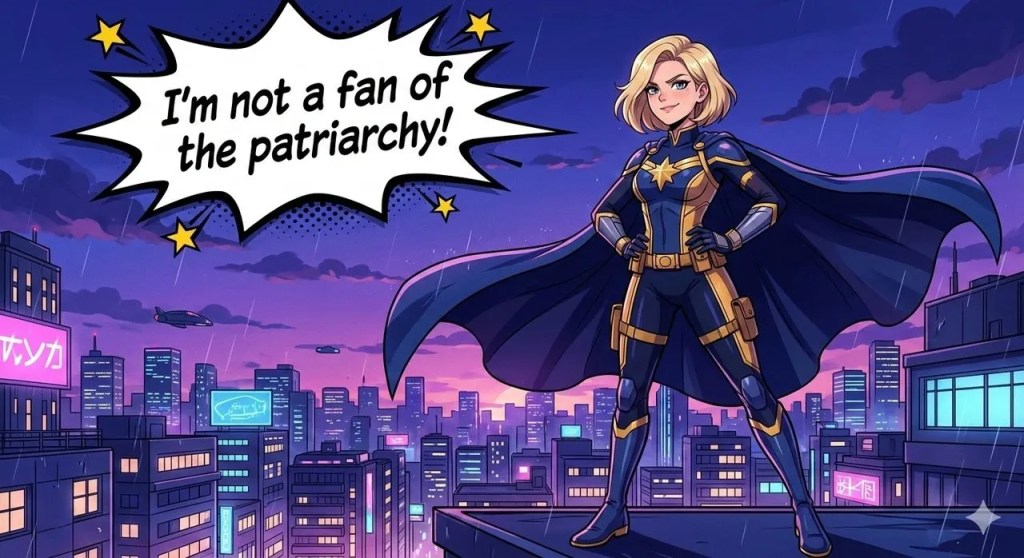
I guess he hadn’t been watching the instructor as carefully as I had been, because he was wrong. A ubiquitous feeling sprouted inside me. I was afraid. After all, every unwelcome touch I have experienced in my life began with a kind word and a smile, a joke, or what I perceived as friendship. I turned around and said, “I’m not a fan of the patriarchy.” He tried to argue. My power swelled, as did my voice. I said, “Don’t patronise and condescend to me.” More arguing ensued. I told him that he had crossed my boundaries. He refused to accept any accountability for his actions. Another thing I had become far too used to, but this time it was too much. He was affecting my learning. I never found a vein because he distracted me solely because he wanted my attention that I did not want to give him. I think after 56 years I have earned the right to decide who gets my attention, so I filed an offical complaint. I wouldn’t have done it, but I was urged by my GP to do it immediately after she had to prescribe me Diazepam just to be able to return to class. My anxiety hadn’t been that high since the CFO of the company I was working for in Korea drove me to a mountaintop instead of the office and tried to kiss me. I was completely rattled.
The moment I reported discomfort, the focus shifted — from his behaviour to my fitness, my medication, and my emotional state. This department is run by women, so I expected a bit of compassion and empathy. I expected to be treated justly and taken seriously. A meeting was set up with a member of the department. On the day, I was ready, or so I thought. The meeting went a bit like an interrogation, but that was okay. I had expected that, even though this was my first harassment complaint in my entire life. They needed to be absolutely certain before moving forward to protect themselves from liability. I knew that. I had never stood up for myself in this way, and I was proud to be taking part in the process. After all, it is my responsibility as an elder to set an example for all the young women who were watching all of this unfold. In the middle of this meeting, the senior staff member suddenly said, “I have an incident report here about you.” They were going to use my disability from this illness that I had developed against me to protect themselves.
My heart sank. I had nearly fainted in class during a first aid assessment a few weeks earlier. It is the middle of summer here in Australia, and someone had turned the heat on in the classroom. I don’t handle the heat well. I had also had gastroenteritis for the previous four days and had had to take antidiarrheals medication to go to class, but attendance was mandatory so I did I what I had to do. I was dehydrated. It was hot, chaotic, and loud. All of that caused my heart rate to spike and then fall, now she was going to use it against me. She said, “I am concerned that you are not fit to go on placement.” I informed her that I had already emailed her the medical certificate from my GP. Then she brought up my medication. At this point I was slightly confused because I would estimate that least 50% of this class is on some sort of medication. Three other students have told me that they are on the exact same medication I have been prescribed. I told her that I would request a more detailed medical certificate from my GP. I thought that would be the end of it, but something inside me made me too uncomfortable to sleep that night.
Early in the morning I wrote an email asking for clarification as to why I was being asked to provide so much documentation when other students who I knew were taking the same medication for POTS were not being considered physically unfit for placement. I hadn’t even been the only person in the class who had nearly fainted and had an incident report filed about it. Someone else had had the same experience just weeks earlier. I never received a reply to this email. What happened instead was that I experienced the worst day of my entire life.
I had to go to class the next day. That was yesterday and here I am now at home writing this story for you. I am battered but not broken. I need to tell you because this was done to me by other women, and that has completely broken my heart. I had been told that witnesses to what the man had done to me would be questioned. I decided to inform one of the girls that I had been partnered with so she could be prepared. After all, it was an unpleasant experience and I felt bad that she was going to have to go through it too. She looked at me and said,”I think you just need to apologise.” I asked for clarification. She said that what I had said was fine but my tone was too much. To be clear, I hadn’t screamed or cursed. I just spoke with authority and the weight of years of gender discrimination behind me. I was gutted, but thanked her for her feedback and returned to class. I tried to carry on, but my face is too revealing.
My friends in the class began asking me if I was okay. I think they thought I was going to pass out again. The instructor took me out into the hall for some air. It was at this point that the floodgates broke. Tears poured from my eyes like a great storm and it wouldn’t stop. I was taken into a private room where the staff member was attempting to sooth me with a heap of unhelpful platitudes about power. If I had been able to speak I would have told her that it was the system that she was part of had caused the tears to flow. The woman from the online meeting was called. She came in the room ready to pounce. She brought up my physical fitness again. I had reclaimed enough of my voice to ask her if she was holding everyone on the same medication in class up to this standard and if they were also going to be excluded. She said, “Just look at the state of you. How can we trust you to handle needles or to go near patients?” To be clear here, I am not the only person who has broke down in tears over this class on campus, but I am the only one who has filed a complaint.
At this point I knew that I had lost the battle on that day. I sat there, head bowed low as they continued to chastise and humiliate me. These two women were actually abusing me for standing up to the patriarchy. I was growing increasing enraged with a power to incept change on a global scale. I tried to communicate that but was told,
“It’s a man’s world.”
I simple cannot accept that. None of us should. In that moment, it felt like equal rights didn’t apply to me. If systems meant to protect us can so easily be turned against us, then they need to be questioned — loudly, persistently, and together. That’s all I have to say today. If you would like to hear more, drop me a line.


Leave a Reply