
One of the questions I hear most often is, “How did you end up in South Korea?” I usually try to give an answer that feels as close to the truth as possible without revealing the chaos and shame that ultimately lay behind my decision to move to the opposite side of the world. Most often, I say that I am interested in temple art and ancient Asian civilisations, which is true, but not the entire story.
I instinctively edited the details of my former life into a narrative that would cause the least discomfort to my Korean friends. In a land where mothers willingly sacrifice their identities to secure opportunities for their children — sometimes even living apart from their husbands in Canada or the United States so their children can become fluent in English — few people would have understood my relationship with my own mother.
At the time, I did not fully understand what had happened in the years leading up to my migration to Asia, or why so many of my experiences had left me carrying such deep rage. It always seemed as though everyone else was dancing to a song I could not hear. I have never been very good at understanding the hidden rules of social interaction that most people seem born knowing how to navigate. I made many mistakes simply because I did not realise I was not supposed to say or do something.
I tried repeatedly to connect with my peers and often failed. Occasionally, I would meet someone who seemed to be dancing to the same tune I heard, and those encounters felt magical, but they were rare.
Surprisingly, this deficiency in social fluency served me well in Korean society. I had been hopeless at forming social connections in the United States, but in Korea I found comfort in the strict hierarchical rules that govern interpersonal relationships. The etiquette of age and status was explained to me early on, and once the order of things had been absorbed, there was rarely deviation or improvisation. The questions remained the same, as did the accepted set of answers.
This orderly method of communication brought relief after a lifetime of worrying whether I was saying something inappropriate or out of line. Any confusion could now be blamed on language or cultural differences. Compressing the past and settling into my allotted position within the social hierarchy made it easier to smooth over the turmoil that accompanied my departure from my hometown. I had begun constructing a mask of normalcy that I am only now trying to peel away so I can become fully myself.
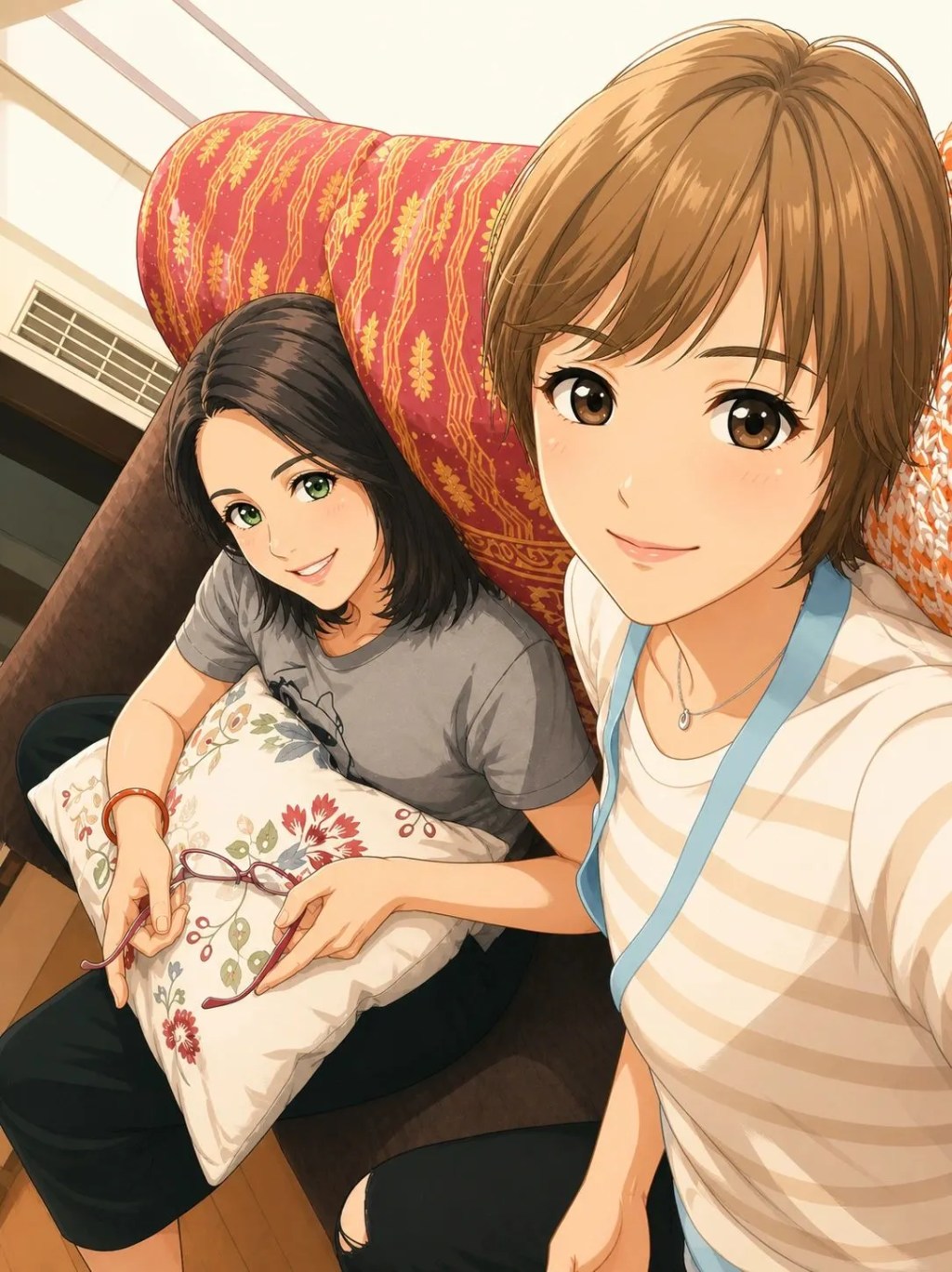
Freed from the awkwardness of navigating unpredictable small talk and dodging misunderstandings, I found myself participating in friendships that possessed a depth of intimacy I had previously experienced only with my grandmother.
At first, I felt foolish and slightly frightened when Korean women would take my hand or link arms with me while walking down the street. I had not been physically close to another woman for many years. The discomfort faded as I came to understand there was nothing manipulative or seductive behind the gesture. It was simple affection between friends.
This kind of tenderness was new to me, and it took time to grow comfortable with the closeness slowly constructed through touch and small acts of care.
Within a few months of arriving in Korea, I heard the word jeong 정 for the first time. Women would sometimes say, “You’ve got jeong,” but when I asked them to explain what it meant, they struggled to put it into words.
For me, jeong means being open to the fullness of platonic friendship and valuing those bonds as deeply as romantic ones. When a Korean friend gives a small gift, it is never just the object itself. It conveys a message:
You matter to me.
The gift might be a sticker, a photograph, candy, or lip balm. The object itself is insignificant compared to what it expresses.
I want to be close to you. I want you in my life.
My Favourite Jeong Experiences
(in no particular order)
- My friend Myeonghee and I left the office for lunch one day and went to Insadong to eat dumplings. Afterwards, we bought matching rings from an artist’s shop and wore them back to work.
- One of my middle school students rode his bicycle all the way from his family’s apple farm to my apartment late at night to deliver a basket of apples from the harvest.
- My friend Young Sun taught me Ganggangsullae 강강술래 in the moonlit street outside my apartment. Afterwards, we set off firecrackers.
- I sang Elvis Presley’s “Burning Love” to my father-in-law at a noraebang 노래방. It was the first time I drank alcohol with him, and it made him very happy.
- When we were first dating, my husband made me a heart-shaped box filled with red origami roses.


Leave a Reply